
By Nkauwos Safaris & Expeditions
One of the most common questions we get from first-time travelers isn't about which parks to visit or when to go — it's "what do I actually need to pack?" And it's a fair question. Kenya's safari regions can swing from chilly pre-dawn game drives to hot midday sun, all within the same day, and packing the wrong gear can mean discomfort at best and missed photo opportunities at worst.
The good news is that safari packing is far simpler than most first-timers expect. You don't need specialized gear from head to toe — you need a smart, weather-appropriate wardrobe, a few key pieces of equipment, and the right documents and health preparations sorted in advance. This guide breaks down exactly what to bring, organized by category, so you can pack efficiently and confidently for your Kenya safari.
Understanding Kenya's Safari Climate
Before getting into the packing list itself, it helps to understand what you're actually packing for. Most safari destinations in Kenya sit at moderate to high elevation, which means mornings and evenings can be genuinely cold, even though daytime temperatures often climb into the 70s and 80s Fahrenheit (low-to-mid 20s Celsius). Early morning game drives, in particular, often start before sunrise, when temperatures can dip into the 50s Fahrenheit (low teens Celsius) or lower, especially in an open-sided safari vehicle with wind chill.
This is why layering is the single most important packing principle for a Kenya safari — far more important than any individual item on this list.
Clothing Essentials
Neutral colors are key. Pack clothing in khaki, olive, tan, and muted earth tones. Bright colors and pure white can startle wildlife, while dark blue and black are known to attract tsetse flies in certain areas. Avoid full camouflage patterns as well, since in several African countries these are restricted to military use.
Recommended clothing items:
- 4–5 short-sleeve shirts, ideally lightweight and breathable
- 2–3 long-sleeve shirts for sun protection and cooler evenings
- 2–3 pairs of lightweight safari trousers or convertible pants
- A fleece or light sweater for early morning and evening chill
- A warm jacket or windbreaker — mornings on open-vehicle game drives get cold
- Sleepwear and comfortable clothing for evenings at camp
- Swimwear, if your lodge has a pool
- A lightweight scarf or buff, useful for dust on game drives
- Undergarments and socks for the full trip length, plus a few extra pairs
Many safari camps offer a laundry service, so packing for 4–5 days and doing a laundry turnaround is usually sufficient even for longer trips.
Footwear
- Comfortable, broken-in walking shoes or lightweight hiking boots — these will be your primary footwear for game drives and walking around camp
- Sandals or flip-flops for relaxing at the lodge or by the pool
- Avoid brand-new shoes; break them in before your trip to prevent blisters
Heavy-duty hiking boots are generally unnecessary unless your itinerary includes a walking safari or trekking component, in which case sturdier, ankle-supporting footwear is worth packing.
Sun and Insect Protection
Kenya sits near the equator, and sun exposure during midday game drives can be intense even on cooler days.
- A wide-brimmed hat or safari cap with a chin strap (useful in open vehicles)
- High-SPF sunscreen (SPF 30 or higher), reapplied regularly
- Sunglasses with UV protection
- Lip balm with SPF
- Insect repellent, ideally containing DEET, for evenings and areas near water
- Lightweight long sleeves and trousers for evening insect protection, particularly in lower-elevation, malaria-risk regions
Health and Medical Essentials
- Any personal prescription medications, packed in carry-on luggage with extra supply in case of delays
- Malaria prophylaxis, if prescribed by your doctor after a pre-trip consultation
- A basic first-aid kit: pain relievers, antihistamines, anti-diarrheal medication, adhesive bandages, and any personal essentials
- Hand sanitizer and a small pack of wet wipes, useful during long game drives without immediate restroom access
- Rehydration salts, particularly useful if traveling during hotter months
We strongly recommend a consultation with a travel health clinic at least four to six weeks before departure to confirm current vaccination and malaria prevention recommendations, as guidance can change based on your itinerary and travel history.
Camera Gear and Optics
- A camera with a zoom lens (200mm or longer is ideal for wildlife photography); a smartphone alone will struggle to capture distant animals well
- Extra batteries and a portable charger — game drives are long, and charging opportunities may be limited
- Plenty of memory cards, since safari trips generate far more photos than people expect
- A dust-proof camera bag or dry bag, as safari roads can be dusty
- Binoculars — genuinely one of the most valuable, and most frequently forgotten, items on this list. A good pair transforms distant sightings into memorable ones, especially for birdlife and animals resting far from the vehicle track
Travel Documents and Money
- Valid passport with at least six months' validity remaining beyond your travel dates
- Kenya eTA or visa confirmation, arranged in advance through Kenya's official immigration portal
- Printed and digital copies of flight itineraries, safari booking confirmations, and travel insurance details
- Travel insurance documentation, including emergency evacuation coverage — an essential, not an optional extra, for safari travel
- A small amount of local currency (Kenyan shillings) for tips and incidentals, alongside a primary card for larger payments
- A money belt or secure pouch for passports and cash while in transit
Practical Extras
- A reusable water bottle — most camps provide filtered or bottled water for refilling
- A small daypack for game drives, to keep camera gear, sunscreen, and snacks within reach
- A headlamp or small flashlight, useful for camps without full nighttime lighting between tents and communal areas
- Universal power adapter, as Kenya uses UK-style Type G plugs
- Dust-proof ziplock bags, handy for protecting electronics and documents on dusty roads
- A lightweight rain jacket if traveling during the short or long rains
- Earplugs, useful for camps near wildlife activity at night (a genuinely memorable, if noisy, part of the experience)
What to Leave at Home
- Camouflage-patterned clothing (restricted for civilian use in several African countries)
- Bulky, hard-shell suitcases — most small-aircraft transfers between parks have strict soft-bag luggage limits, often around 15 kg (33 lbs) including camera gear
- Excessive valuables or jewelry
- Heavily scented toiletries, which can attract insects or, in rare cases, animal curiosity around camp
A Note on Luggage Limits
If your itinerary includes any fly-in safari segments between parks, be aware that light aircraft typically enforce strict soft-sided luggage limits, often around 15 kg (33 lbs) per person including camera equipment, with hard-shell suitcases frequently not accepted at all. If your trip includes internal flights, we recommend packing in a soft duffel bag and checking your specific weight allowance with your safari operator well before departure.
Sample Packing Checklist Summary
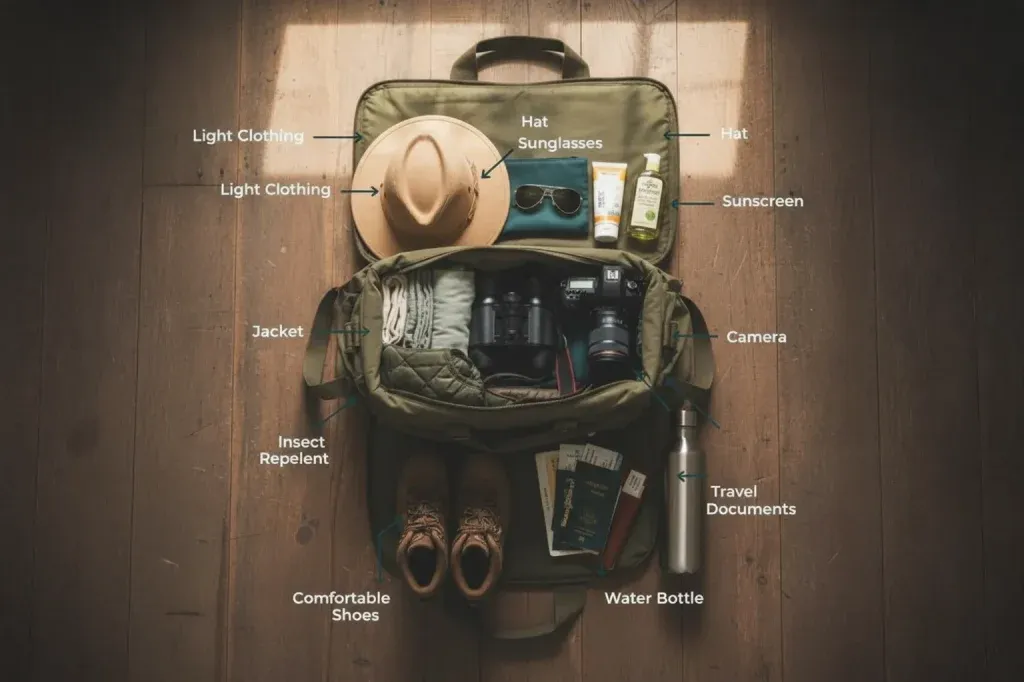
- Neutral-colored clothing, layered for temperature swings
- Broken-in walking shoes and camp sandals
- Wide-brimmed hat, sunglasses, high-SPF sunscreen
- Insect repellent and any prescribed malaria medication
- Basic first-aid kit and personal medications
- Camera with zoom lens, extra batteries, memory cards
- Binoculars
- Passport, visa/eTA confirmation, travel insurance documents
- Local currency for tips and incidentals
- Reusable water bottle, daypack, headlamp, power adapter
- Soft-sided duffel bag (essential for fly-in safaris)
Final Thoughts
Packing for a Kenya safari isn't about bringing everything you own — it's about packing smart, layered clothing and a small set of purpose-built essentials that match the realities of early morning game drives, dusty roads, and long days outdoors. Get the fundamentals right — layers, sun protection, a good camera setup, and your health and travel documents — and everything else falls into place.
At Nkauwos Safaris & Expeditions, we provide every guest with a personalized pre-departure checklist tailored to their specific itinerary, season, and activities, so nothing gets left behind. Ready to start planning your trip? Get in touch with our team and we'll help you prepare for a safari you'll remember for all the right reasons.